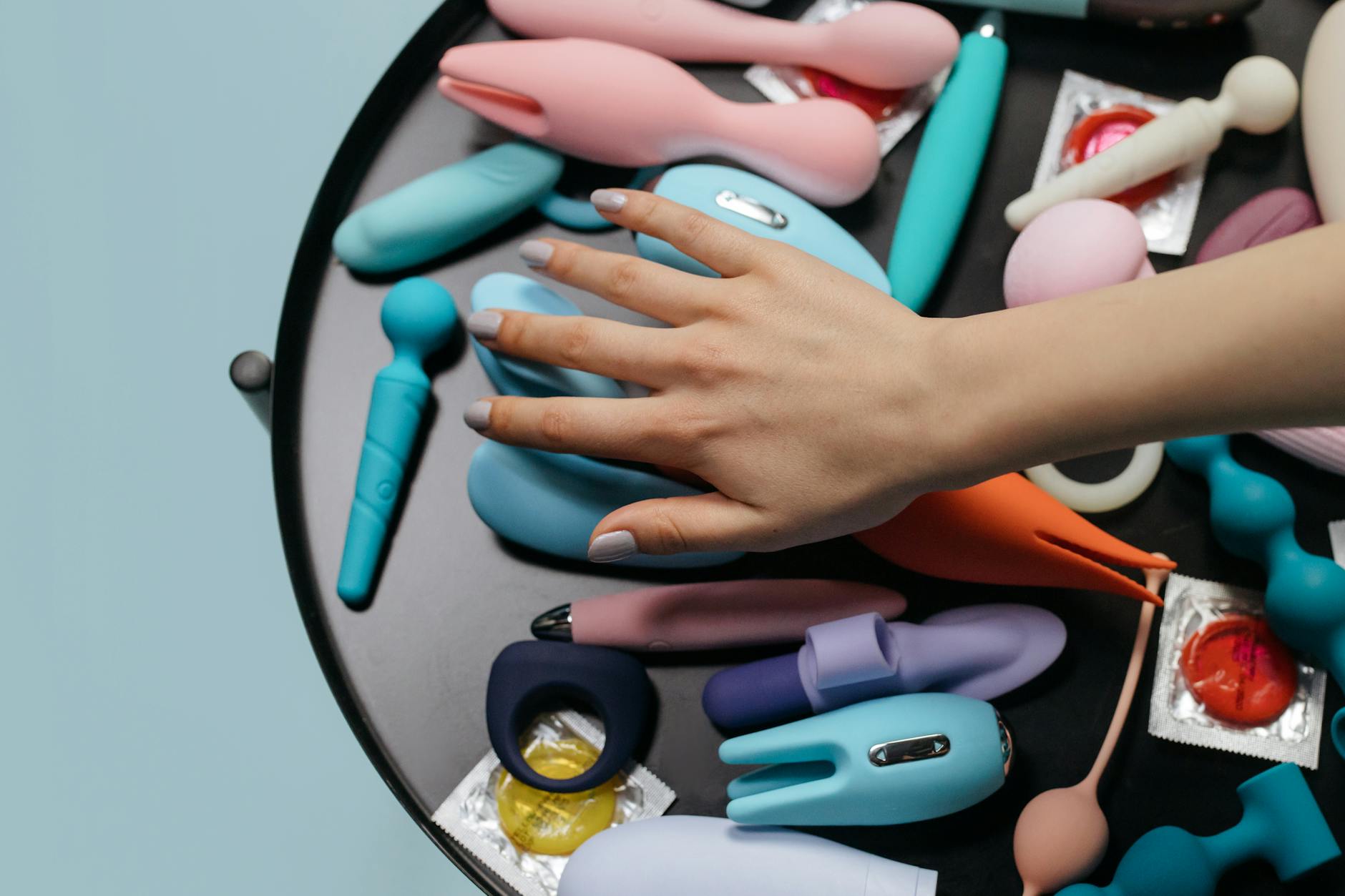
Can You Use a Lemon Vibrator If You Take Antidepressants
SSRIs kill arousal for about 40 percent of people. Here's what actually happens in your body, why a lemon clitoral vibrator often helps, and what your doctor needs to know.
Antidepressants save lives. They also wreck sex for a lot of people. Between 40 and 60 percent of people on SSRIs (selective serotonin reuptake inhibitors) report some degree of sexual dysfunction. That's not you being broken. That's your medication doing exactly what it's designed to do, just in a way that feels really unfair.
Here's the thing nobody tells you: yes, you can use a lemon vibrator if you take antidepressants. Yes, it can actually help. But first you need to understand what's happening in your body so you can talk to your doctor about it instead of just powering through in silence.
SSRIs work by increasing serotonin availability in your brain. That's brilliant for mood regulation. It's less brilliant for the complex neurochemical cascade that turns you on.
Dopamine is the neurotransmitter that drives desire. Norepinephrine helps with physical arousal. Acetylcholine is involved in lubrication and genital sensitivity. When serotonin goes up, all three of those tend to go down or get muffled. It's like someone turned the volume knob down on your entire pleasure system.
For some people it's mild. For others, arousal becomes genuinely difficult. Orgasm takes forever. Or it feels like it's further away, less intense, or sometimes just doesn't arrive at all. That's not a personal failure. That's pharmacology.
A traditional vibrator relies on you being able to feel sensation and generate arousal from that sensation alone. When your nervous system is quieted by medication, that feedback loop gets weaker.
Lemon suction vibrators work differently. Instead of rattling or vibrating your way to arousal, they use air-pulse technology to create a gentle sucking sensation. This activates different nerve pathways than traditional vibration does. For people on SSRIs, that difference is often noticeable.
Here's why: the clitoral glans has roughly 8,000 nerve endings, but they're organized in distinct clusters. Vibration activates some of them. Suction activates others. When your medication has dampened your response to one type of stimulation, switching to another can bypass that dampening effect entirely.
I've had clients tell me that a traditional vibrator does nothing while a lemon vibrator works within minutes. That's not because they're different people. It's because they're using a tool that matches their current neurochemistry better.
If dopamine suppression is the issue, then theoretically you want to activate as many dopamine pathways as possible during sexual activity. That means a few things:
First, novelty matters. If you've been using the same toy the same way for months, your brain stops registering it as interesting. A lemon clitoral vibrator introduces a different sensation profile. That novelty alone can help restart dopamine flow.
Second, variety in patterns helps more than you'd think. Most lemon vibrators have multiple suction modes. Switching between them during a session keeps your brain engaged rather than letting it zone out.
Third, building in more foreplay time actually compensates for dopamine dampening. Your brain needs longer to build up the neurochemical momentum for arousal. Budget 20-30 minutes instead of 10. That's not a bug. That's just how your brain works right now.
This is important: don't just accept sexual dysfunction as a permanent trade-off for mental health. You have options.
Some SSRIs are less likely to cause sexual side effects than others. Bupropion, for example, actually increases dopamine rather than decreasing it. Sertraline and paroxetine are notorious for sexual dysfunction. If you're on one of those, ask if switching is an option.
Timing also matters. If you take your SSRI in the evening, consider asking if you can take it right after sex instead of before. The medication still works for mood throughout the day, but you get a window of a few hours where it hasn't fully built up in your system yet.
Some doctors prescribe a medication specifically to counteract sexual side effects. Buspirone or bupropion added to an SSRI can help restore arousal and orgasm capacity. It's not perfect for everyone, but it works for enough people that it's worth asking about.
Don't be shy with your doctor. Say the words. "My SSRI is affecting my sex life" is not an unusual conversation. Your doctor has heard it hundreds of times.
Sex on antidepressants is different. Not worse. Different.
It requires a bit more intention. A bit more focus. A bit more patience. Some people actually describe it as better because it forces them to slow down and pay attention instead of rushing through a quickie on autopilot.
The lemon clitoral vibrator becomes less of a "just make it work faster" tool and more of a partner in exploring what pleasure feels like on your current neurochemistry. You're not trying to get back to how it was before the medication. You're building a new relationship with arousal.
That mindset shift is half the battle. The other half is having the right tool that matches what your body can currently do. A lemon vibrator often fills that gap.
If you've been on your SSRI for several months and sexual dysfunction is severe and hasn't improved, a different medication might be worth exploring. Not everyone can tolerate antidepressant-induced sexual dysfunction, and your mental health doesn't have to come at the cost of your sexual health.
Also, if you're in a relationship, involving your partner in this conversation changes everything. Most partners don't mind that sex looks different or takes longer. What they do mind is the silence. The moment you say "my medication affects my arousal and here's what helps," you transform it from a personal failure into a shared problem you're solving together.
No. SSRIs and SNRIs are the worst offenders for sexual side effects. Tricyclic antidepressants can affect sex drive too, but the pattern is different. Bupropion (Wellbutrin) actually tends to preserve or improve sexual function because it increases dopamine instead of just serotonin. If sexual dysfunction is a dealbreaker for you, the specific medication matters enormously. Talk to your doctor about which antidepressant has the lowest sexual side effect profile.
Sometimes sexual dysfunction improves within weeks as your body adjusts to the medication. Other times it persists the entire time you're on the medication. There's no reliable timeline. Some people see improvement after 4-6 weeks. Others notice no change after years. That's why having a conversation with your doctor about it matters. If it hasn't improved in 8-12 weeks, it probably won't improve without intervention.
Yes, actually. The suction mechanism in a lemon clitoral vibrator sometimes works better than traditional vibration when sensation is muted. The air-pulse stimulation activates different nerve pathways. That said, if you've lost sensation entirely, you might need to experiment with different intensity levels and patterns. Start low. Give it time. Your body might surprise you. If nothing works after consistent effort, talk to your doctor about medication adjustments.
No more than a traditional vibrator would. The concern about toy dependency is mostly myth. Your body doesn't become dependent on external stimulation. What actually happens is that you learn what kind of stimulation works for your current neurochemistry. A lemon vibrator is just a better match than the last toy you tried. If you stop using it, you can still have orgasms through other means. It's just not the fastest path anymore.
Yes. Full stop. Your partner probably suspects something has changed. The silence is worse than the conversation. Sex is supposed to be something you share, not something you suffer through alone. When you explain that it's a medication side effect and not about attraction or desire, it changes the entire dynamic. You shift from "something's wrong with me" to "we're solving this together." That's powerful.
No. Do not do this without talking to your doctor. Stopping antidepressants abruptly causes withdrawal symptoms and often triggers the depression or anxiety they were treating. If sexual dysfunction is severe enough that you're considering quitting, that's the conversation to have with your prescriber. There are medication adjustments and alternatives that preserve your mental health while improving sexual function. You don't have to choose.
Antidepressants change how your body experiences pleasure. That's real and it matters. But it's not permanent and it's not unsolvable. A lemon clitoral vibrator can help bridge that gap by activating nerve pathways that traditional vibrators miss. More importantly, being honest with your doctor about sexual side effects opens up a conversation that most people are suffering through in silence.
Your mental health and your sexual health are not mutually exclusive. You deserve both. It just takes a bit more information and a bit more intention than it did before the medication.
If you're navigating this, reach out. Whether you need to talk through medication options, explore what a lemon vibrator can do for you, or just want to know you're not alone in this experience, that's what we're here for. Get in touch with us and let's figure out what works for your body right now.