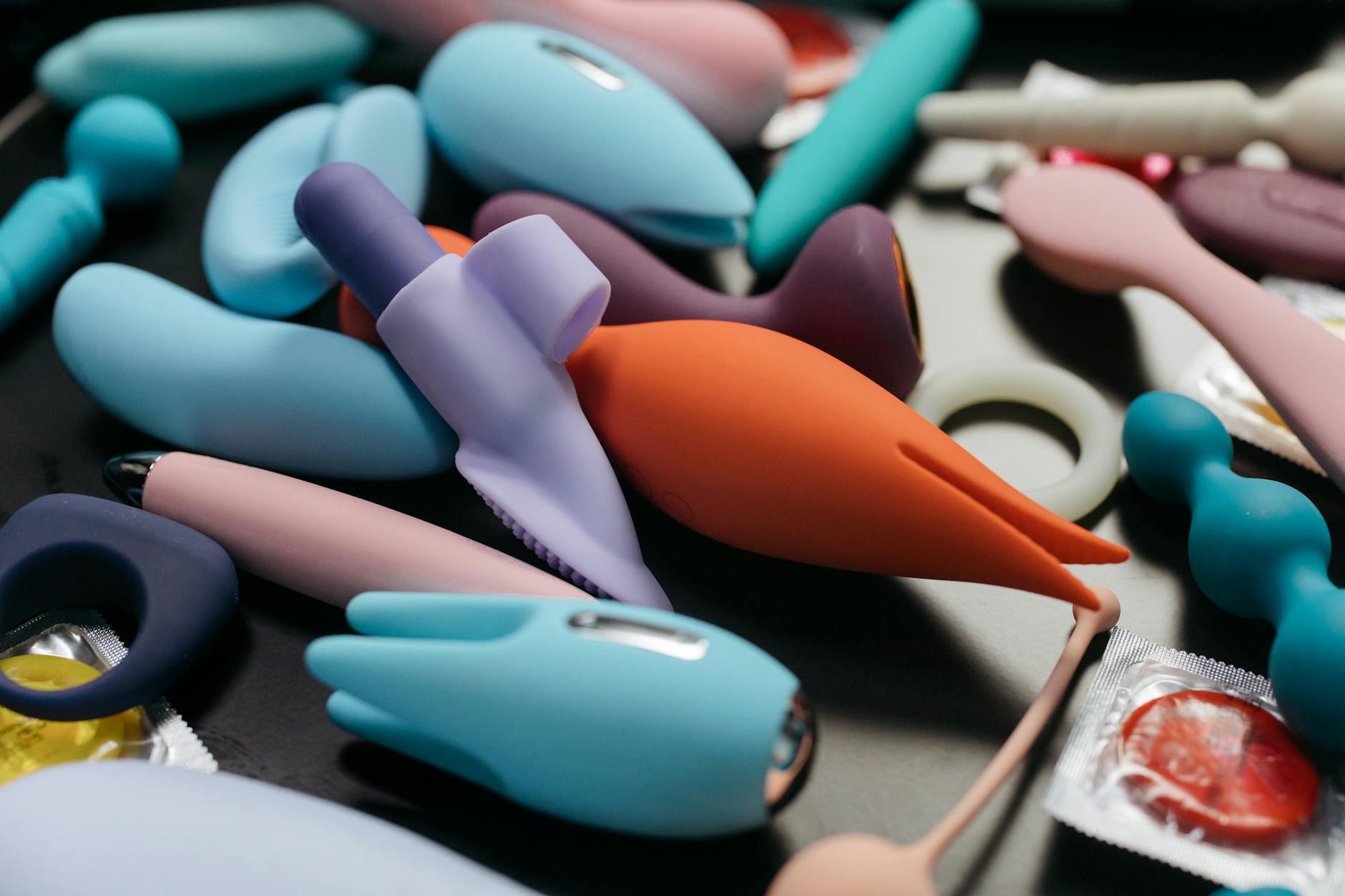
How Lemon Vibrators Feel Different When You Have Thyroid Issues
Your thyroid controls more than you think. Here's what happens to pleasure when it's out of balance, and why your lemon clitoral vibrator might feel completely different.
Let's be real. You probably don't think about your thyroid unless a doctor tells you to. But thyroid hormones affect arousal speed, orgasm intensity, lubrication, sensation, and how responsive your body is to stimulation. That means if your thyroid is off, your experience with a lemon vibrator might feel wildly different than it did six months ago.
I'm not talking about feeling tired. I'm talking about the actual mechanics of pleasure shifting when thyroid hormones shift. That distinction matters, because most people blame relationship stress or medication side effects when the culprit is sitting in their neck the whole time.
Your thyroid produces two main hormones: T3 and T4. These regulate your metabolic rate, but they also affect blood flow, nerve sensitivity, and how quickly your nervous system responds to stimulation. Here's the cascade.
Hypothyroidism (underactive thyroid) slows everything down. When thyroid levels drop, your metabolism downshifts. Blood flow to the genitals decreases. Your nervous system becomes less reactive. Arousal takes longer to build, orgasms feel muted or harder to reach, and lubrication becomes thinner. You might feel like you're trying to turn on a dimmer switch that only goes to 30 percent.
Hyperthyroidism (overactive thyroid) speeds everything up. When thyroid levels are too high, your nervous system becomes hyperactive. Sensation can feel almost overwhelming. Orgasms might come faster but feel scattered. Some people report that stimulation that normally felt perfect suddenly feels too intense. You're trying to turn on that dimmer switch, but your hand keeps slipping.
Both states change how your clitoral tissue responds to suction. That's where things get interesting for lemon vibrator users.
Here's the key: suction doesn't rely on the same neural sensitivity as vibration alone. When you use a traditional vibrator, you're asking your nervous system to interpret rapid vibrations into pleasure signals. If your thyroid is making your nervous system sluggish, that translation gets muffled. If it's making you hyperactive, the signal gets overwhelming.
Lemon suction works differently. It creates a gentler, more sustained stimulation that doesn't depend as much on nerve speed. The sensation is more about pressure and rhythm than frequency. Many clients with thyroid issues tell me that when their hypothyroidism was untreated, their standard vibrators became almost useless. Then they switched to a lemon suction device and suddenly had access again.
Why? Because suction stimulates deeper nerve clusters in the clitoral complex, not just the surface. Your thyroid status affects surface sensitivity more dramatically than it affects deeper tissue response.
1. Extend your warm-up dramatically if you're hypothyroid. Build in 20-30 minutes of foreplay, mental arousal, or slow exploration before you reach for your lemon vibrator. Your nervous system needs more time to transition into the parasympathetic state where pleasure happens. Rushing it feels like trying to run before the engine starts.
2. Start at lower suction levels and build slower than usual. If you normally go straight to pattern 3 or 4, dial back to pattern 1 and spend a full minute there. Your nervous system might be interpreting signals differently right now. You're learning your body again. That's not failure. That's information.
3. Use lubrication, even if you normally don't. Thyroid hormones affect tissue thickness. Hypothyroidism makes tissue thinner and drier. Hyperthyroidism can make tissue feel raw or oversensitive. Water-based lube is your friend either way. It's not a sign that something is wrong. It's a sign that you're being smart.
Here's something nobody warns you about: when you start thyroid replacement, your pleasure response will shift again. And it might take weeks to stabilize. This is normal.
If you've been living with untreated hypothyroidism, starting medication is like turning up the dimmer switch after months of darkness. Your first experience with a lemon suction device after starting medication might feel suddenly intense or almost foreign. That's your nervous system waking up. It's usually good news, but it can feel surprising.
The adjustment period varies wildly. Some people stabilize in two weeks. Some take two months. The medication dose might shift slightly as your body adjusts. Your pleasure experience will track with that adjustment. If you find yourself feeling weird about your device in week three of medication, don't assume it's broken. Your body is probably just recalibrating.
Thyroid changes are often invisible. If you're managing hypothyroidism or hyperthyroidism, your partner might not have any idea that your sexual response has completely altered. And you might not have words for it either. "I feel different" doesn't cut it when you're trying to actually have good sex together.
Here's what I tell couples: separate the thyroid conversation from the intimacy conversation. Don't say "I can't have pleasure anymore because of my thyroid." That's true physiologically, but it sets you both up to feel helpless. Instead say, "My nervous system needs different input right now. I'd like to explore that with you. Can we try this for a month and see what happens."
Then actually try it. Use your lemon clitoral vibrator in ways you haven't before. Adjust the patterns. Change the timing. Involve your partner in the exploration if that feels right. What usually happens is that people rediscover pleasure in a new form. It's not the same as it was. It's often better because it's intentional.
If your thyroid was recently diagnosed and you're adjusting medication, give it 6-8 weeks before panicking. Pleasure takes time to recalibrate. If pleasure has completely disappeared after 8 weeks on a stable dose, mention it to your doctor. It might mean your dose needs tweaking, or it might point to something else entirely. Either way, it's clinical information worth sharing.
If you're hyperthyroid and everything feels too intense, tell your doctor that too. Sensation overload isn't something you have to just accept while you wait for medication to work. There are adjustments that can help.
If you're on thyroid medication and noticed that your pleasure shifted when the dose changed, that's not coincidence. Thyroid hormones affect sexual response measurably. You're not imagining it. Document it. Bring it to your next appointment.
Thyroid issues are really common. About 1 in 10 people deal with thyroid dysfunction at some point. But almost nobody talks about how it affects sexuality. We talk about fatigue, weight changes, brain fog. We skip right over the fact that arousal changes, orgasms change, sensation changes.
When you find a lemon vibrator or lemon suction device that works with your body as it actually is right now, that's a significant thing. You're not settling. You're not broken. You're adapting. Your pleasure is worth that attention.
No. Once your thyroid hormones are balanced with medication, sensation typically returns to your baseline. The timeline varies. Some people feel restored within weeks. Others take a few months. If you're months into stable thyroid medication and sensation still feels muted, that might point to a different issue. But hypothyroidism itself isn't a permanent change to pleasure capacity. It's a temporary shift that responds to treatment.
Completely safe. The device itself doesn't interact with thyroid hormones. What changes is your sensation and how intense stimulation feels. If you're hyperthyroid, you might need lower suction levels or shorter sessions because your nervous system is already in overdrive. The Lem or other lemon clitoral vibrators are still great choices. You just might need to dial back the intensity while you're getting treated.
Possibly, but usually not dramatically. Brand switching can affect absorption and timing, but if the dose stays the same, you probably won't notice a major difference in pleasure response. If you do notice a shift after a brand switch, give it two weeks to stabilize. If it persists, talk to your prescriber about it. Sometimes a brand difference creates a dose-equivalent issue that's worth discussing.
There's no universal timeline. I've seen people feel restored within two weeks. I've seen others take two months. A lot depends on how long you lived with the imbalance and how efficiently your body absorbs the medication. Generally, if you're going to notice improvement, it happens within 4-6 weeks. If nothing has shifted by 8 weeks, mention it to your doctor. They might adjust the dose or investigate other factors.
Thyroid issues can change tissue thickness and lubrication, which might make direct stimulation feel uncomfortable. If you're experiencing pain, that's worth discussing with your doctor. It's usually not the vibrator itself. It's usually tissue-related, and that's treatable. In the meantime, increase lubrication and try lower suction levels on your lemon vibrator. Comfort matters more than anything else.
There's no reason to unless the device is causing pain or if your pleasure changes are so dramatic that they're part of a larger pattern you want to discuss. But if you're struggling with sensation and your doctor is trying to figure out whether your medication dose is right, mentioning that your sexual response has shifted can be useful clinical data. You don't need to say you're using a specific device. Just say that your arousal or orgasm response has changed since you started treatment. That information helps your doctor.
Your thyroid is connected to your pleasure more directly than most people realize. When it's off, your experience with any vibrator, including a lemon clitoral vibrator, will shift. When you get it balanced again, you're not just treating fatigue and weight. You're restoring access to sensation and arousal that might have felt completely gone. That matters. Your pleasure matters. And understanding the thyroid connection takes the mystery out of why your body responded a certain way. You're not broken. Your nervous system is just adjusting to a change in hormones. That's fixable.