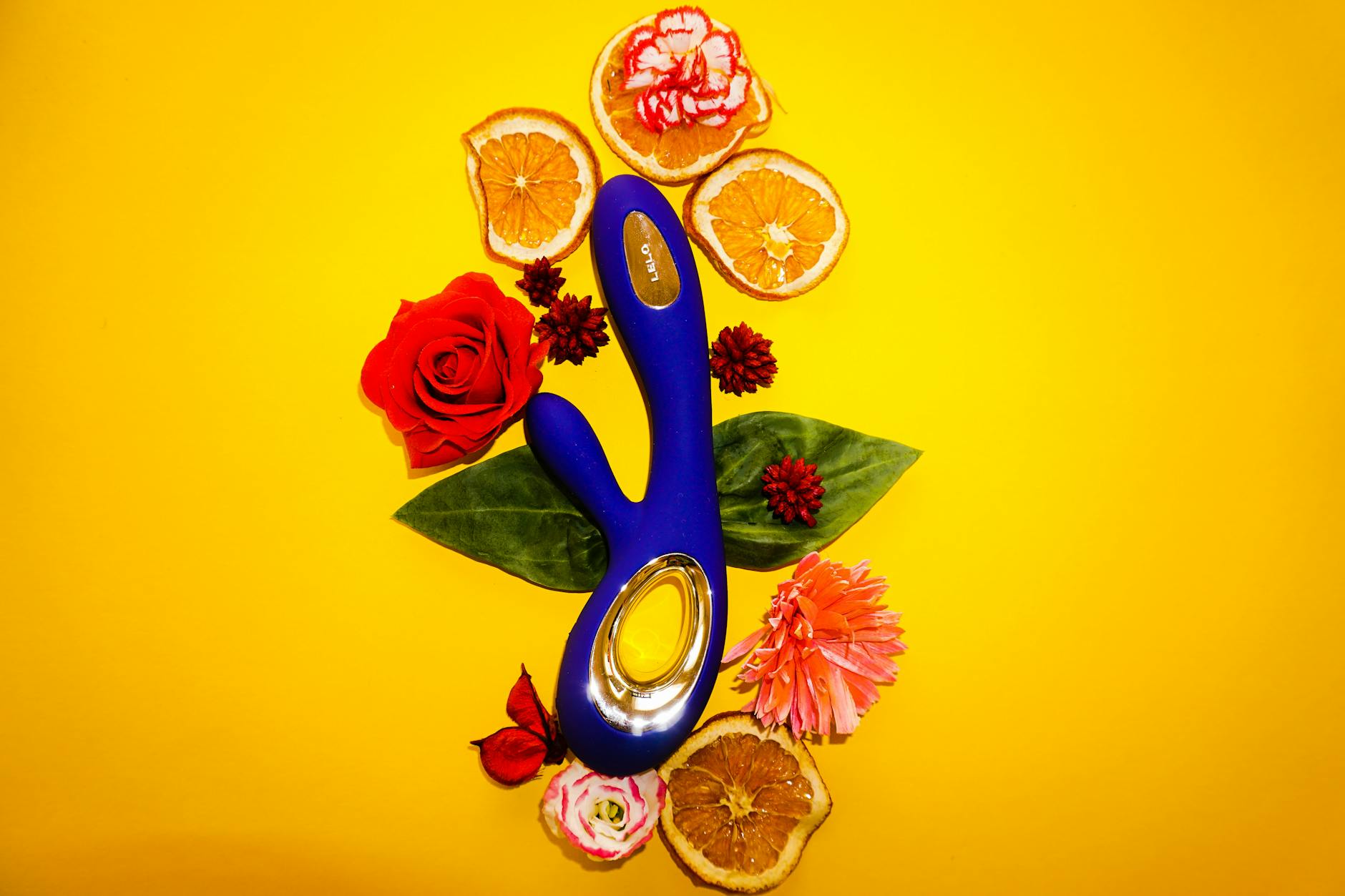
Anxiety doesn't just ruin sex. It erases the possibility of sex happening at all. Your nervous system is in lockdown mode, blood is staying away from your genitals, and your brain is narrating everything like a sports commentator. Is this taking too long? Should I be wet by now? Am I doing this right? Welcome to the pleasure paradox: the harder you try to feel good, the less capable your body becomes.
Your parasympathetic nervous system (the rest-and-digest mode) is what allows arousal to build. Anxiety shifts you into sympathetic mode (fight-or-flight), which literally redirects blood flow away from your genitals and toward your limbs and brain. You're physically prepared to run from a tiger, not to enjoy a lemon clitoral vibrator.
This happens for tons of reasons. Maybe you were raised to feel shame around pleasure. Maybe a past partner made you feel rushed or self-conscious. Maybe you're comparing yourself to porn or to friends' stories about their orgasms. Maybe you've had bad sexual experiences and your body learned that arousal isn't safe. The origin story doesn't matter as much as this: your nervous system can be retrained.
One of my clients, Claire, spent three years unable to orgasm because she was convinced something was medically wrong with her. After five visits to three different gynecologists (all fine), we finally addressed the real issue: she'd internalized a message from a partner years ago that she was "difficult" to please. Every time she tried to feel pleasure, her brain whispered, "You're taking too long. You're inconvenient." Her nervous system had learned that arousal was unsafe.
A lemon sexual toy like the Lem does something crucial for anxious bodies: it removes the performance element. You're not trying anymore. The device is doing the work. Your job shifts from achieving to receiving, which sounds simple but neurologically it's massive.
Here's why that matters. When you're using your hand or relying on a partner's touch, there's an invisible pressure. Am I going to finish? Will they get tired? Is this weird? A lemon clitoral vibrator bypasses that loop because:
It's consistent. Your hand gets tired or changes pressure. The Lem doesn't. Consistency helps your nervous system settle because there's one less variable to monitor.
It feels different from partnered touch. This separation is actually healing for anxious people. There's no partner watching, no judgment, no unspoken expectation. Just you and sensation.
It works faster. Most people with clitoral anxiety find that air-suction vibrators like the Lem create arousal in ways that feel less effortful. You're not "chasing" the orgasm. It's happening to you.
If you're using a lemon vibrator to work through pleasure anxiety, here's the structure that actually works:
Week one: sensation without agenda. Set aside 15 minutes when you're alone and not rushed. No goal of orgasm. Just touch your body with the Lem on a low pattern (pattern 1 or 2). Notice what patterns feel good. Where does your attention want to go? Your neck, your breasts, your inner thighs? This is information, not failure. Do this three times before moving on.
Week two: external exploration. Same setup, same time. Now explore the external vulva with the vibrator without penetration intent. The clitoral head, the clitoral hood, the inner labia. Spend time noticing micro-sensations. You might notice your mind trying to narrate or evaluate. That's normal. Gently redirect: "I'm just noticing sensation right now." Repeat three times.
Week three: pattern progression. Stay with the same external work but let yourself try patterns 3 and 4 if 1-2 start to feel like they're not enough. This is where you're learning what actually resonates with your body, not what you think should.
Week four and beyond: permission. By now your nervous system has logged about 45 minutes of pleasurable sensation without pressure. If an orgasm happens, great. If not, you've still rewired something: the association between arousal and shame is weakening.
Anxiety often lives alongside self-criticism. You're not just anxious about pleasure. You're also angry at yourself for being anxious. That's the second layer that keeps people stuck.
When you're using a lemon adult toy and your brain starts its commentary, the move is not to push harder or suppress the thought. It's to notice it and disengage. "There's that narrative again." Not "I'm failing" or "This isn't working." Just observation. This is the actual nervous system reset.
Some of my clients find it helps to set a boundary with that inner voice before they start. "For the next 15 minutes, I'm not available for criticism. You can talk to me after." Sounds silly until you realize how much mental real estate anxiety has been renting.
Don't set expectations about what "should" happen. No timelines (I'll finish in 5 minutes), no comparisons (my partner says they orgasm in 2 minutes), no metrics (I should be able to do this by now).
Don't use a lemon vibrator while also trying to perform for a partner. Anxious pleasure and partnered pleasure activate different nervous system states. Keep them separate until your solo practice feels genuinely reliable.
Don't force progression. If pattern 1 feels right for three months, that's perfectly fine. You're not training for anything. You're learning.
Sometimes anxiety about pleasure is actually about the relationship. You're not anxious with every partner. You're anxious with this one. Or you were fine until something shifted between you two. A lemon vibrator can help you access pleasure solo, but if the relationship anxiety is the real issue, that's different work. Sometimes couples therapy or individual therapy addressing the relationship dynamic is what actually frees you up.
Your nervous system didn't learn to be anxious overnight. It won't unlearn it overnight either. But here's what I know from years of working with people rebuilding their relationship to pleasure: nervous systems are plastic. They change. The patterns you think are permanent are actually just well-rehearsed.
Using a lemon clitoral vibrator is one tool in that rewiring. It's not magic. It's just a way to practice being present with sensation without the baggage that usually comes along.
Most people notice a shift within 3-4 weeks of consistent practice. By consistent I mean two to three 15-minute sessions a week. Your nervous system needs repetition to believe that arousal is safe. That said, some people feel the shift after one session just from removing the performance element. Everyone's timeline is different.
Eventually, yes. But the solo foundation matters first. When you've spent time alone with the vibrator learning what patterns feel good without judgment, introducing it with a partner is much easier. You already know what you like. Now you're just inviting them into that knowledge.
That's actually important information. It might mean you're not ready for partnered use yet, or it might mean you need a slower progression. It could also mean you need to work through some deeper shame material before pleasure feels possible. A therapist trained in sexual health can help identify what's coming up.
No. Orgasm is not the goal. Reconnecting with your body's capacity for sensation is. Some people reach orgasm, some don't, and either way it counts as success if your nervous system feels more regulated afterward.
No. Anxiety patterns are learned responses. They can be unlearned. That doesn't mean you'll never feel anxious again. It means you'll have a nervous system that knows how to return to baseline and can access pleasure even when anxiety shows up.
Yes. Completely. Pleasure is not measured by who's present or what's happening. It's a sensory and nervous system experience that's valid whether you're alone or with someone else.
Once you've spent time rebuilding your relationship to pleasure solo, the work shifts. You learn to bring that calm nervous system into other contexts. Partnered touch. Different positions. Different paces. But it all builds on the foundation you create when you're alone with a lemon clitoral vibrator, learning that arousal is safe and your body knows what it wants.
If you're curious about other aspects of pleasure and how lemon sexual toys can support different needs, there's a whole landscape to explore. For now, the invitation is simple: start with sensation. Remove the expectation. Let your nervous system remember that pleasure is possible.