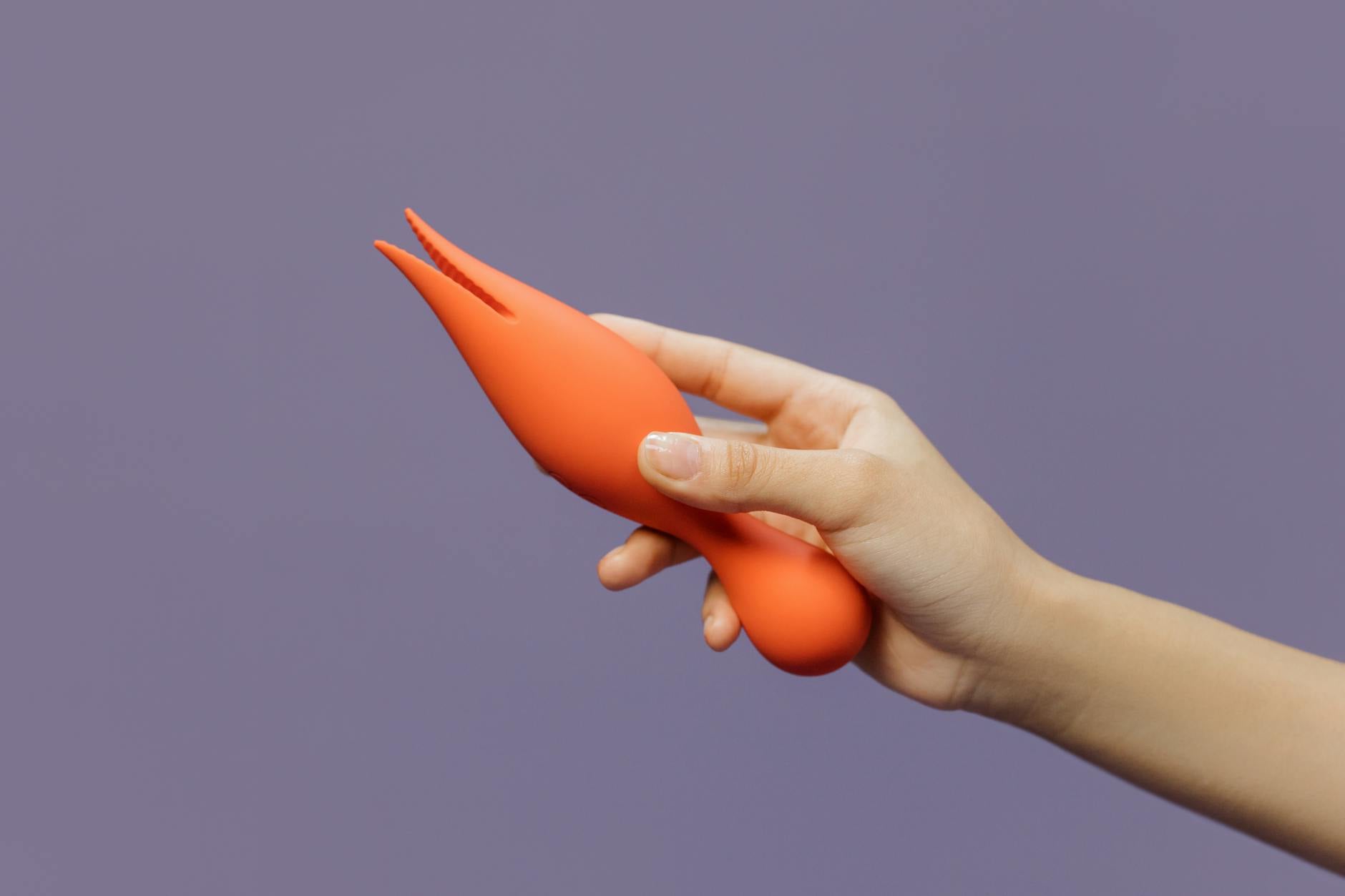
How to Use a Lemon Vibrator When You Have Vaginismus With a Partner
Vaginismus tightens your body involuntarily. A lemon clitoral vibrator bypasses penetration entirely, rebuilds sensation, and gives you back the conversation with your partner.
Vaginismus isn't a sign something is wrong with you. It's your nervous system protecting you. When your pelvic floor muscles contract involuntarily before or during penetration, that's your body saying no. The reflex is real. The pain is real. And the shame most people carry about it is completely unnecessary.
Here's what most people get wrong: they assume vaginismus means you can't have pleasure. That's false. Vaginismus affects penetration specifically. It does not touch your capacity for clitoral pleasure, arousal, or orgasm. This distinction changes everything.
Traditional vibrators focus on broad surface stimulation or internal patterns that might trigger the same pelvic floor tension you're trying to release. A clitoral vibrator like those from The Lemon Suction works on a completely different principle: precision. Suction and focused vibration stimulate the clitoral nerves without requiring any penetration or internal awareness.
For someone with vaginismus, this matters neurologically. When you're not braced for penetration, your entire pelvic floor can relax. You're not managing two separate nervous systems at once (yours plus your partner's anxiety about whether penetration will happen). You're just experiencing sensation. That safety alone changes what's possible.
The other reason a lemon clitoral vibrator works: it gives you complete control. You decide the intensity, the duration, the pattern. No guesswork. No performative aspect. Just sensation on your terms.
If you have a partner, you might feel pressure to skip this step. Don't. Solo time with a lemon vibrator is not selfish. It's neurological retraining.
Start with the lowest setting. Not because you're fragile, but because low settings let you notice sensation clearly without your nervous system jumping into defense mode. Spend 2-3 weeks exploring what feels good at low intensity. You're not trying to orgasm. You're trying to remember that your body can feel good without pain attached.
Keep a small notebook. Write down what patterns feel good, what intensity you prefer, where on the clitoris feels most sensitive. This isn't clinical data. It's ammunition for when your partner asks you what you like. Most people with vaginismus have never felt safe enough to notice their own preferences. You're rebuilding that language from scratch.
Set a time that feels separate from partner time. If your partner is in the house, close a door. Create a container that says: this is for me. That boundary is protective. It also means when you do eventually involve your partner, it won't feel like you're performing therapy.
Most couples try to talk about vaginismus while naked, in bed, after failed penetration. That's the worst possible moment. Your nervous system is already heightened. Your partner is already disappointed. Nothing good happens here.
Instead, schedule a conversation outside the bedroom. Not during sex. Not when you're both tired. Saturday morning coffee. Tuesday evening on the couch. Somewhere neutral.
Here's the template that works:
**"I want you to know what I'm experiencing, and I want your support to change it. This isn't about you or how I feel about you. My body has a protective reflex that I'm working to rewire. Here's what helps me right now. Here's what doesn't."
Then be specific. "I need us to focus on clitoral pleasure for the next month." "I want to use my lemon vibrator while you're next to me, but I need you to just be present, not participate yet." "After I've had an orgasm that feels good, I want to cuddle, and I want you to know that's the goal." Not penetration. Cuddle. Done.
Your partner might say: "I don't know what to do." That's honest. Your response: "Right now, you don't need to do anything. You just need to not push for more." Most partners of people with vaginismus are terrified they're breaking you. Telling them explicitly what not to do often feels better than telling them what to try.
Once you've spent 2-4 weeks solo, you're ready for a partner to be in the room. Not in bed necessarily. Just present.
Week 1-2: They watch, but don't touch. You use your lemon vibrator exactly like you do alone. They're sitting or lying next to you. No commentary. No performance. No penetration talk. You're demonstrating: here's what pleasure looks like for me right now. This is not foreplay leading to sex. This is the entire experience.
Some people find this hot. Some find it awkward. Both are fine. The point is your partner learns what your genuine responses look like when you're not managing their expectations.
Week 3-4: They touch, but you maintain the vibrator. Your partner might stroke your arm. Kiss your shoulder. Hold your hand. Nothing penetrative or pressuring. You keep control of the lemon vibrator entirely. You're building a neural map where partner touch and pleasure aren't automatically followed by pressure to do more.
Week 5+: Integration. Your partner might use their fingers on non-penetrative areas. The external vulva. The clitoral hood. Your inner thighs. You're still using your vibrator. You're still in control. But now you're beginning to pair partner touch with pleasure that feels manageable.
If at any point your pelvic floor tightens, you pause. Not in shame. Not in frustration. You pause, breathe, tell your partner: "My nervous system is checking in. Give me a second." Then you decide: do you want to continue, or do you want to stop? Either is valid.
Don't jump straight to partner involvement. The solo phase is not something to rush through.
Don't let your partner persuade you to "just try" penetration "to see if it still hurts." That's how nervous systems get more protective, not less.
Don't assume that because you can use your lemon vibrator alone without pain, penetration will automatically become possible. Those are different neurological experiences. One doesn't promise the other.
Don't use this process to perform recovery. If you're only doing it because your partner wants penetration, your body will know. That ambient pressure creates the exact conditions that worsen vaginismus.
A skilled pelvic floor PT can teach you what your muscles are actually doing and give you specific techniques to release the tension. This is not therapy. It's functional retraining. Many people find that a lemon vibrator plus pelvic floor work moves things much faster than either alone.
Look for a PT who has specific vaginismus experience and who is comfortable talking about pleasure, not just pain. Some therapists still frame sexual function only in medical terms. You want someone who gets that rebuilding confidence matters as much as releasing muscle tension.
Some people see shifts in 4-6 weeks. Some take 6 months. Some take longer. This is not linear. You might have a great week followed by a week where your nervous system tightens again. That's normal. You're retraining a protective reflex that's been there for years. Patience is not optional.
What matters is consistency. Using your lemon vibrator twice a week is better than hoping for a breakthrough from once a month. Your nervous system learns through repetition that pleasure is safe.
Absolutely. In fact, that's the exact situation where a lemon clitoral vibrator shines. You're not fighting against your body. You're working with the nervous system you have and building pleasure from a place that doesn't trigger your protective reflex. Penetration can come later if you want it. Or never. Both are okay.
That's a conversation, not a problem to solve with willpower. Your partner is allowed to want things. You're allowed to not be ready. That friction is real, but it needs to stay in the conversation realm, not push you to force your body into something it's not ready for. This is where working with a couples therapist can help tremendously.
No, if you're doing it at a pace that feels safe. If you're forcing intensity or using it as a way to "train" your body to accept penetration, then yes, you might tighten more. The key is pleasure-focused, not goal-focused. Your lemon vibrator is not a treatment tool. It's a way to experience sensation safely.
They don't need to understand it completely. They need to believe you. They need to trust that when you say something doesn't feel okay, you mean it. They need to let go of the idea that penetration is the only kind of sex that counts. Those three things? You can work with that.
Then you never pursue it. Vaginismus recovery doesn't obligate you to penetration. Some people work through it and discover they prefer clitoral pleasure, partnered touch, and other forms of intimacy. That's not failure. That's clarity. Recovery means you have the choice. What you do with that choice is entirely up to you.
You'll know because you'll want to, not because you feel like you should. You won't be testing yourself. You won't be proving anything. You'll just be curious. And your pelvic floor will be relaxed most of the time, not constantly braced. That's the physical signal. The emotional signal is: you're not afraid. You're hopeful.
Vaginismus is not a permanent diagnosis. It's a nervous system response that can be rewired. A lemon clitoral vibrator, patience, clear communication, and the right support can shift everything. Your pleasure matters. Your timeline matters. Your body matters. Start there.