How to Use a Lemon Vibrator With Your Partner After Kids
Parenthood doesn't have to end your sex life. Here's how couples rebuild physical intimacy and emotional connection using lemon vibrators and proven strategies.
Your sex life doesn't disappear when you become a parent. It gets buried under laundry, interrupted by baby monitors, and crushed by the weight of simultaneous burnout. You're touching another human constantly. The last thing you want is more touch. Your partner feels the same way but can't say it without sounding like a complaint. So you both quietly accept that sex is something that used to happen to you, like your twenties or your flat stomach. It wasn't a choice. It just dried up.
I've worked with hundreds of couples in this exact position. The surprising part isn't that their sex life stalled. The surprising part is that most couples assume it's gone for good. It's not. It's just sleeping. And it wakes up faster than you'd think when you approach it strategically.
That's where lemon vibrators and a little intentional planning make a real difference.
Let me separate the biological from the relational. After kids arrive, several things happen at once.
Your body is legitimately different. If you gave birth, your pelvic floor has been through a major event. Your hormones are recalibrating. Your touch sensitivity might feel numb or irritable because you've spent months being touched by a dependent human. If you didn't give birth, you're probably managing resentment about unequal labor distribution, mental load, or the fact that your partner is the one with the depleted nervous system. Both of you are sleep-deprived, which tanks desire directly.
But here's what matters: none of that is a relationship problem. It's a circumstance problem. Couples therapists see this constantly. The sex doesn't disappear because the love did. It disappears because you're both too tired to navigate the logistics.
I recommend lemon clitoral vibrators to postpartum couples not because they're magic, but because they solve three specific problems at once.
First, arousal takes longer after kids are in the picture. Not because desire is lower (though it often is temporarily). But because you're mentally elsewhere. A lemon vibrator gets to intensity quickly, which means you don't have to carve out an hour just to reach the physical state where sex feels good. You can work with 20 minutes and actually get somewhere.
Second, sensation often feels muted. Your nervous system has been on high alert for months or years. You're listening for your kid. You're watching for danger. The clitoral suction action of lemon vibrators bypasses the need for sustained buildup. The sensation is distinct and focused, which often restores pleasure faster than traditional vibration.
Third, using a lemon vibrator together changes the dynamic. It's not one person trying to satisfy the other while exhausted. It's a tool you're both engaging with. That shifts the emotional weight. You're not performing. You're exploring.
Here's what couples get wrong: they try to resurrect their old sex life in the margins. Late night when both kids are asleep. Early morning before anyone wakes up. These feel like the only options. They're actually the worst options because you're both already at capacity.
Instead, build intimacy on your actual schedule.
For most postpartum couples, that means: during school hours, during a babysitter visit, or yes, after the kids are in bed but earlier than you think. Not 11 p.m. when you're both zombies. 8:30 p.m. after bedtime, before you've decompress-collapsed on the couch.
Have this conversation with your partner explicitly. Not during sex, not during a fight. Just say it straight: "I miss us. I want to figure out when we could carve out even 20 minutes where we're both somewhat present." Most partners say yes immediately. They've been waiting for permission too.
Once you have a time window, commit to it loosely. Not "every Thursday at 8 p.m." which feels like a dentist appointment. But "we're going to aim for once a week, probably on a weekend evening." Then actually show up to it, even if you're not that into it at the start.
There's no script here. Different couples will want different things. But I'll give you the framework that works most often.
Start clothed. Seriously. You're both probably feeling weird about your bodies right now. Especially if one of you is postpartum. Jumping straight to nakedness amplifies that. Instead, get into bed or onto the couch. Clothes on. And just talk for five minutes about something that isn't the kids or household logistics. What you liked about your partner. Something they made you laugh at. Something sexual that turned you on recently. This isn't therapy. It's a bridge from parent-mode back to partner-mode.
Then move into touch. Not genital touch yet. Hands on skin where it feels good. Neck, shoulders, back. Foreplay, basically. This takes longer than you think it will, and that's the whole point. You're waking up sensation after months of shutdown.
When you introduce the lemon vibrator, one partner holds it while the other receives. Start on the lowest setting. The sensation is strong enough that you don't need intensity to feel something. The receiving partner can guide what feels good. The giving partner is present, watching, engaged. This is inherently more intimate than solo use.
Switch after the first person has an orgasm or decides they want to stop. Some couples find that switching roles deepens connection. Others do it one at a time and that's fine too. There's no correct way.
The key variable: your partner is present and engaged, not scrolling their phone in the next room while you use a toy. The tool amplifies intimacy when it's partnered. Used alone while your partner feels excluded? It can widen the gap.
Here's where it gets real. In most post-kid couples, one person wants sex more than the other.
Usually it's the person who didn't just spend four hours managing a crying toddler. Or the one who feels less touched-out. The discrepancy isn't a sign of a broken relationship. It's just... normal.
A lemon vibrator helps because it can close that gap without requiring the lower-desire partner to perform. If you want sex and your partner doesn't, a lemon vibrator means you can share the experience without them having to get fully aroused or hard or whatever the barrier is for them. They can be present, engaged, attentive. You can both experience pleasure. No one's resentful after.
The lower-desire partner often finds that participation actually reignites their interest. Touch builds touch. Seeing your partner excited rebuilds your own arousal. But it doesn't always work that way, and that's okay too. At minimum, the higher-desire partner gets their needs met while staying connected.
This matters more than you think. After sex, especially partnered sex with a tool that's new, just lie there for a minute. Touch, nothing sexual. Talk about what felt good. Ask your partner what they enjoyed. Don't immediately roll over and check your phone or worry about tomorrow. Even five minutes of physical closeness and check-in afterward rebuilds the emotional connection that exhaustion has slowly eroded.
You might also address any awkwardness explicitly. "I felt shy using that at first, but I'm glad we did." Or "That actually brought back something I missed." These small moments retrain your brain to see sex with your partner as safe and good, not as another obligation.
If desire remains completely absent for one partner, or if the sex life doesn't resume even after you've tried this approach a few times, that's worth talking about with a therapist. Sometimes postpartum depression, hormonal shifts, or relationship resentment needs more than logistics and a new toy. A relationship specialist can help identify what's actually underneath the shutdown.
Similarly, if one partner feels resentful about the other's lack of desire or initiation, that resentment needs to be addressed before you'll feel truly connected. A lemon vibrator is a tool, not a fix.
But for most couples whose sex life simply got buried under the chaos of early parenting? This approach works. You rebuild intimacy in small increments. You use tools that help your body cooperate with what your heart wants. You commit to showing up for each other, even when you're tired. And slowly, the connection comes back.
Most healthcare providers give the medical all-clear for penetrative sex around six weeks postpartum, assuming no complications. For external clitoral stimulation with a tool like a lemon vibrator, the timeline is similar, though listen to your body. If something hurts, stop. Your pelvic floor may need more recovery time, especially if you had tearing. Chat with your OB/GYN if you're unsure.
Sometimes, yes. Seeing your partner excited, feeling good sensations without pressure to perform, and being physically close often reignites interest naturally. But desire loss tied to depression, hormonal imbalance, or relationship issues needs to be addressed separately. A lemon vibrator isn't a cure for those things. It's a tool that works best when the foundation is already somewhat solid.
It's less weird than you think. Most couples feel awkward the first time, then wonder why they waited so long. You're essentially saying, "I like sex and I want to share pleasure with you." That's not strange. That's healthy. The awkwardness usually melts in about two minutes of actually doing it.
Don't make it a big moment. Just bring it up casually, probably not during sex. "I was thinking about trying a lemon vibrator together. I think it could be fun and maybe take some pressure off both of us." Most partners respond well because it removes the performance aspect that exhaustion creates. If your partner seems hesitant, ask what concerns them. Often it's worry about being "replaced" by the toy. Reassure them that's not the point.
This is the fear that stops a lot of couples. Here's the reframe: a vibrator is like a sexual skill your partner doesn't naturally have. It doesn't replace them. It enhances the experience you're sharing. Using one together actually means you're prioritizing the relationship. You're saying, "I want us to both feel good, and I'm willing to use every tool available to make that happen." That's partnership.
There's no prescription. For some couples, it's every time they have sex. For others, it's occasional. The important part is that it's something you've both agreed to and both enjoy. If you find yourself using it every single time and vanilla sex feels off the table, check in about that. Balance matters. But if you're using it once a week and both love it? That's great.
Parenthood fundamentally changes your relationship. It takes up space, bandwidth, and touch you used to give your partner. That's not a failure. It's just what happens when you're building a family. But it doesn't have to be permanent. Intimacy can come back. Desire can return. Connection can be rebuilt, often faster and more deeply than it was before.
A lemon vibrator won't do that alone. What will is deciding, together, that your relationship matters enough to carve out time and presence. The tool just makes that time productive instead of exhausting.
If you're stuck on how to start this conversation with your partner, or if desire loss feels bigger than logistics, consider talking to a relationship therapist. That's what they're for. Otherwise, schedule that 20 minutes, show up for each other, and remember why you chose this person in the first place. Everything else follows from there.

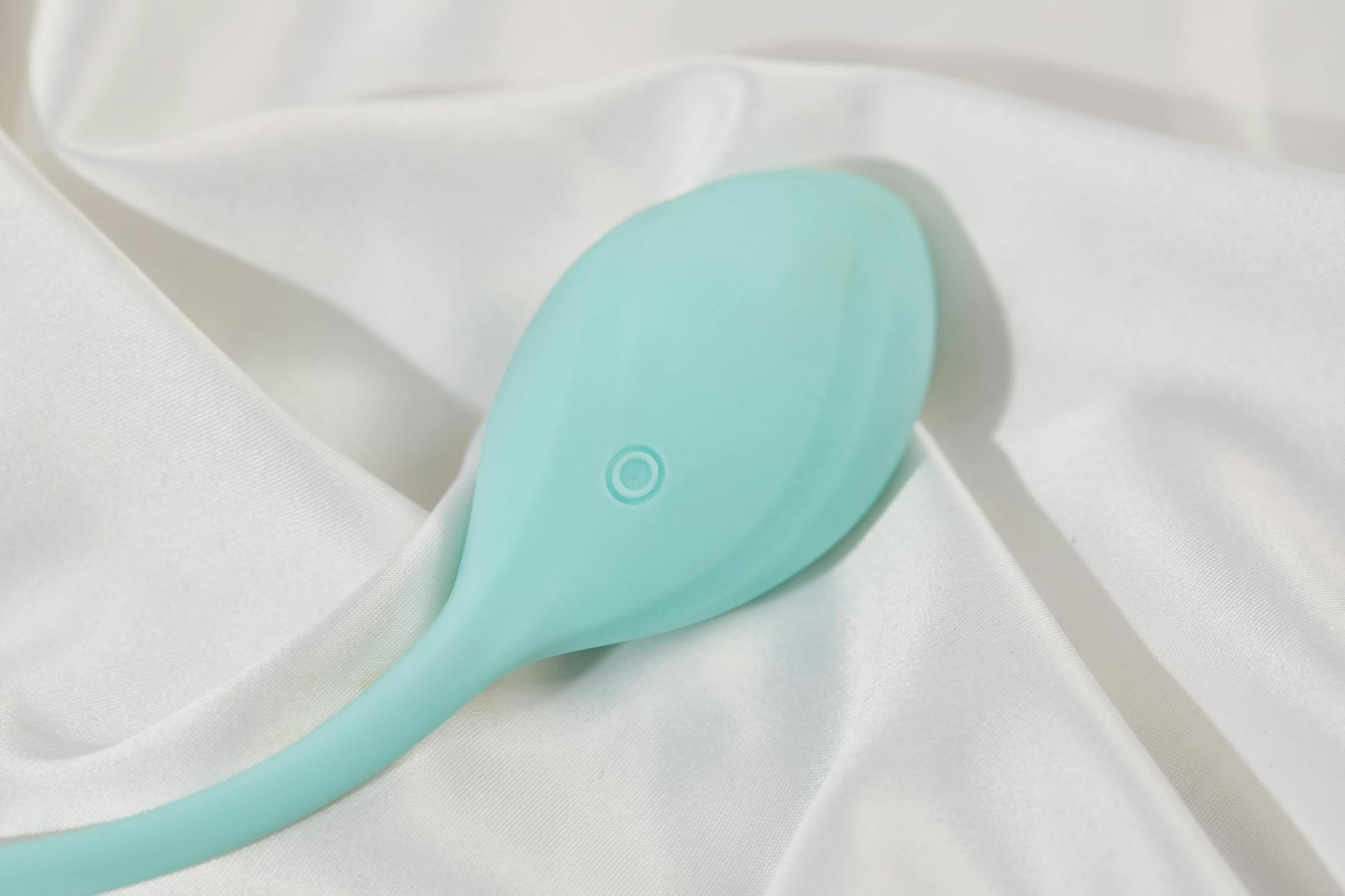 Photo by